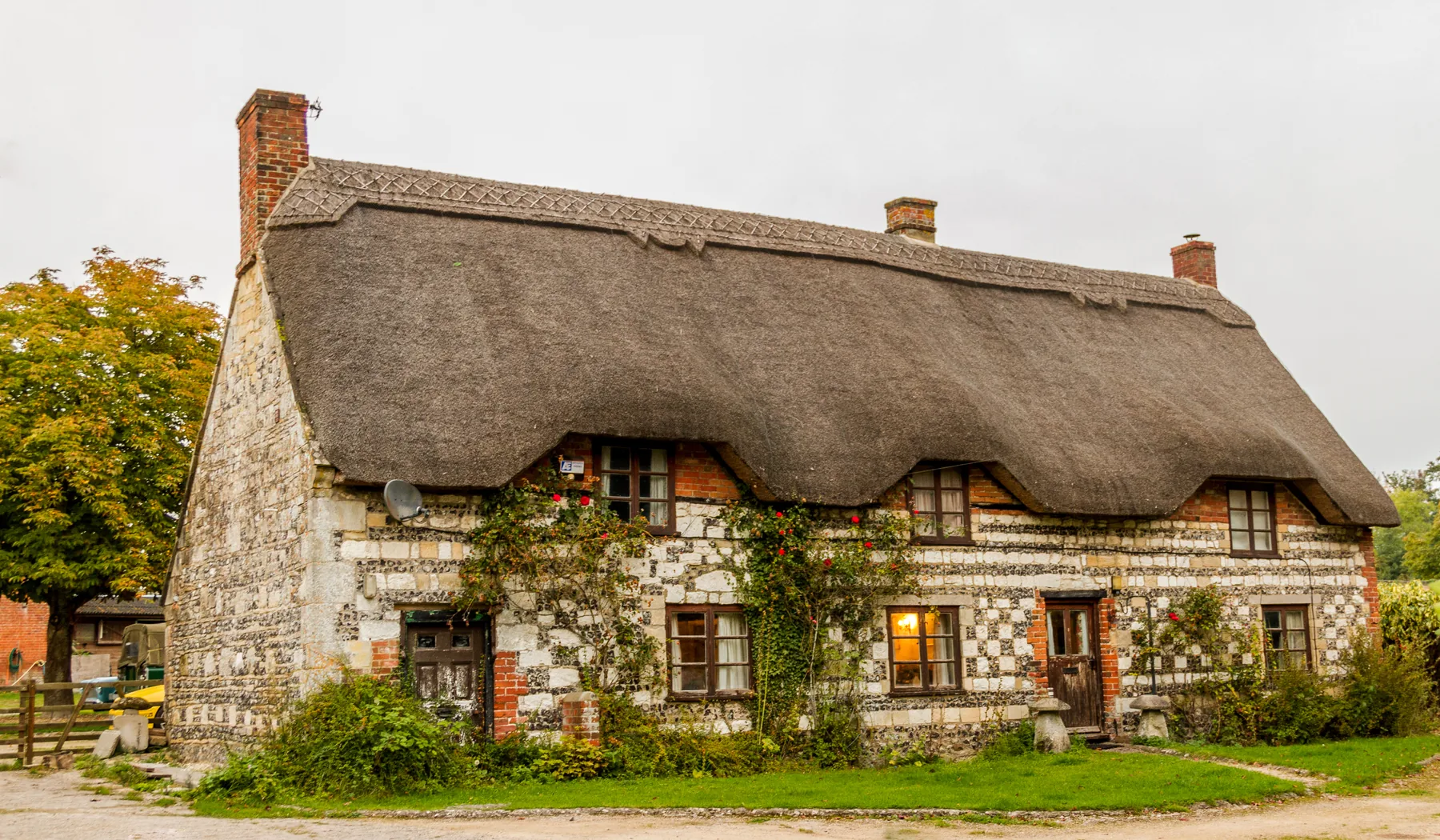
Record the material and the work type
Do not store one date labelled “new roof” if the work was actually a ridge renewal, patch repair, overcoat or partial re-thatch. Record the thatching material and the scope of work so future dates make sense.
Condition beats a generic countdown
Historic England describes localised repair, patching, recoating and full re-thatching as different interventions. A competent thatcher can assess what your roof needs; an online lifespan estimate cannot.
Keep inspection notes and repeat photographs so the roof’s actual progression is visible.
Keep the ridge on its own timeline
Ridges commonly show wear before the main coat. Store ridge work separately and record the style, material and date. This avoids the common problem where an owner remembers “the roof was done in 2022” but that date only referred to the ridge.
Use the history for financial planning
Even without predicting the exact year of major work, a clear record helps you budget. Costs from previous inspections, repairs and ridge work show the real pattern of spending on your property.
When ownership changes
A buyer or new owner can start with known dates and evidence instead of relying on an estate-agent description. They should still obtain their own professional advice, but the inherited record is far more useful than guesswork.
Use age as context, not a verdict
Knowing the approximate age of the main coat and ridge is useful for planning, but it should sit beside condition evidence. A roof that has been sheltered and well maintained may weather differently from another roof of the same material and age in a more exposed location. Photographs and inspection history provide the missing context.
When a thatcher gives a broad expectation for future work, record the date and wording of that professional opinion. Do not silently convert “review again in two years” into “roof must be replaced in two years”. Those are different statements.
Keep layer history where it is known
Traditional thatched roofs can contain older material beneath newer work. Historic England notes that basecoats can be archaeologically important. If a project exposes or retains older layers, keep the contractor or conservation notes with the roof record because that information may be difficult to recover later.
Plan condition reviews
Roof life is property-specific. Track inspections, photographs, repair history and the dates your own thatcher recommends.
- Historic England — Repair or Renew the Roof in an Older Home
- Historic England — Conservation of Traditional Thatch
Source guidance can change. Check the current version and obtain property-specific advice where needed.